Speaker = Rizal F. Hariadi, Associate Professor, Department of Physics & Biodesign Institute, Arizona State University
Seminar Title = Multi-axial DNA origami force spectroscopy reveals hidden dynamics of Holliday junctions
Abstract = In living cells, biomolecules operate in a crowded 3D milieu with a complex multi-axial stress environment. These mechanical forces are fundamental regulators of biomolecular structure and function. However, most single-molecule force spectroscopy techniques primarily exert force along a single axis, thereby failing to recreate cellular mechanical environments. Here, we present the Multi-Axial Entropic Spring Tweezer along Rigid DNA Origami (MAESTRO), a molecular tool that applies defined multi-axial piconewton forces to biomolecules using programmable ssDNA entropic springs. Combining MAESTRO, single-molecule Förster resonance energy transfer (smFRET), and Bayesian non-parametric FRET (BNP-FRET) enables a high-throughput study of biomolecules under different complexities of multi-axial tension forces. We demonstrate our tension-inducing molecular tool on Holliday junctions (HJs), intermediate DNA structures important in the homologous recombination process. Instead of faster kinetics under tension, we discovered ≥5× slower kinetics of the HJ conformations under multi-axial tension than under tension-free conditions, which in turn permits direct observations of previously hidden HJ conformational intermediates. Notably, under four-way tension, we observed clear evidence of interconversion between several different kinetic patterns in many individual HJs, which were previously believed to be non-interconverting owing to the rugged energy landscape of the system. In addition to controlling conformational dynamics, we demonstrated that tension mechanically regulates T7 endonuclease I activity, directly linking mechanical environments and molecular mechanics to enzymatic function. By overcoming single-axis limitations, MAESTRO opens new frontiers in molecular mechanobiology, transforming our ability to investigate how multi-axial forces regulate biomolecular functions and reveal the hidden dynamics of mechanosensitive biomolecules.
Bio = Rizal Hariadi was born in Surabaya, Indonesia. He joined Arizona State University in 2016 as an Associate Professor in the Department of Physics and the Biodesign Institute, where he established BIOmolecular Nanosystems with Increasing Complexity and Size (BIONICS) Laboratory. His passion for science began with an enlightening experience in the Indonesian Physics Olympiad team, leading to his undergraduate degrees at Washington State University under the tutelage of Tom Dickinson, followed by a Ph.D. at California Institute of Technology. There, Rizal focused on the non-equilibrium dynamics of DNA nanotubes and the hydrodynamics of bursting bubbles under the guidance of Erik Winfree and Bernard Yurke. He subsequently completed postdoctoral research in single-molecule biophysics at both the University of Michigan with Sivaraj Shivaramakrishnan and the Wyss Institute at Harvard University with Peng Yin. Currently, his interdisciplinary team at ASU develops precision tools from the molecular to centimeter-scale for bottom-up reconstruction of mechanical systems involved in disease pathogenesis. Along the way, the lab immerses itself in the mystery of the origin of life and develops frugal technologies in the global health context for resource-poor settings. Rizal is the recipient of an Arizona Biomedical Research Commission New Investigator Award, an NSF CAREER Award, and an NIH Director's New Innovator Award.
Event Details
Date/Time:
-
Date:Tuesday, October 7, 2025 - 3:00pm to 4:00pm
Location:
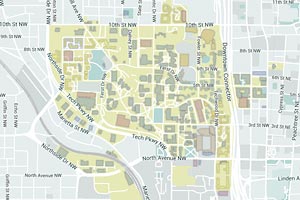
Howey Physics Building N201/N202