|
Commencement Address, 1995 "Your Achievements and Preparedness in these Exciting, Challenging, Competitive and Critical Times" Dr. M. Raymond
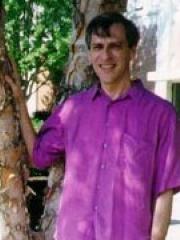
Flannery September 1, 1995 Well - Congratulations to each and every one of you, the graduating members of the class of 1995 and to all of the Masters and the Doctoral Degree Candidates here today. Today is the big payoff for all that you have accomplished while at Georgia Tech. All of you have deserved this day, today. As some say, graduation is one of the four great milestones in your life; the other three are the day you were born, the day you die and the day you finally pay off your college loan. We are all here today, your parents, your friends, and your faculty to mark, to affirm and to celebrate your past and present achievements. Your degree is an embodiment of these achievements. We are also here today to promote your readiness and preparedness to proceed into the world outside of Georgia Tech. We shall send you forth today into that world with pride and onto new beginnings. And this is happening today Friday, September 1, 1995 - in times characterized as being Exciting, Challenging, Competitive and Critical. And I would also like to congratulate the parents and families of the students. My daughter Clare graduated also a few months ago and I was also a proud parent, sitting there in the audience also listening to the Commencement Speaker. I have therefore a special affinity with the parents today. When I was asked by President Clough to speak at this Commencement of about 800 graduates and their families, my first reaction was "no sweat" - after all 800 students are about the size of my average sophomore class in Physics and I am used to that! But then the President went on to say "the Commencement Address usually lasts about 20 min." Now this threw me into a spiral. "Consternation", because I thought, "How can I possibly say all I know in 20 minutes?" But then I remembered George Bernard Shaw's sage advice to a young man who had asked him a similar question. "Then Sir," Shaw said, "If I were you, I would speak very slowly." And this is the same G. Bernard Shaw who said, "The man who has never made a mistake will never make anything". Earlier, I had mentioned your achievements while at Tech and now comes the big reward. You have all achieved at various levels - whether at the Bachelor's, Master's, or Doctorate levels. Common to all of these levels of achievement there lies certain basic principles which wittingly or unwittingly you have followed. And these principles can be encapsulated within only two French words. Outside the Physics Dept. at Trinity College, Dublin there stands an inscription which reads Savoir, Savoir Faire, Faire and Faire Savoir. "Savoir" means "to know"; "Savoir Faire" means, "to know what to do"; "Faire" means "just to do it"; as in the commercials for Nike Athletic products and "Faire Savoir" means "make it known, publish it, teach it..." You have all been exposed to this kind of methodology and your accomplishments prove it. Savoir, Savoir-Faire, Faire and Faire-Savoir. That's where it's at! And you didn't know you could also learn French from your Physics Professor! I have also mentioned your "preparedness", your preparedness to carry out a project, your preparedness to pursue new knowledge, your preparedness to enter the outside world. It is your mind that has been prepared at Georgia Tech. And this is important. Preparation of minds depends on an excellent and advanced education, all of which you have received. In this light, we must remember that advanced education depends most of all upon a creative faculty engaged in significant research, teaching and discovery. As Alexander Fleming, the discoverer of penicillin noted, "The unprepared mind cannot see the outstretched hand of opportunity." or to put it another way "Chance of discovery favors the prepared mind". Curiosity alone does not produce new knowledge. No. Skepticism alone does not produce new knowledge. No. Confidence alone does not produce new knowledge. No. Chance alone does not produce new knowledge. No. Significant new knowledge depends on the rigorous work and on the imagination of prepared minds. So then my first charge to you today is this: Take advantage of your prepared mind and let it seek, identify and grasp that outstretched hand of opportunity. I have also mentioned that your achievements and preparedness have all equipped you for the outside world at these times which are Exciting, Challenging and above all Critical and Competitive. As far as Competition is concerned, remember that you do not have to be any cleverer than your fellowman in order to succeed. You just have to be there one day earlier! These are Exciting times for Technology. Discoveries that once were reported exclusively in Professional Scientific Journals are now also being reported routinely in the newspapers and on TV. There is an increased Media interest and awareness of Technology and Discovery. Witness the articles on the Hubble and Galileo telescopes in outer space bringing back new knowledge about supernovae, black holes, the 30 Kelvin ripples at the edge of the expanding universe, ripples that are the signatures and the residue of the primordial big bang. Witness the fact that new technologies as the laser have allowed the trapping of individual atoms and molecules so that they can be individually held up for scrutiny and examined at leisure. Witness the new state of matter - the Bose-Einstein Condensate - composed of a few atoms and molecules - recently discovered, and reported in The New York Times a few weeks ago. From all of this work, we are learning more and more about the right questions to ask. And this is how significant advances are ultimately made and how new Impacts-on- Society are created. As evidenced by the space telescopes and lasers, progress in Science today depends on three things -- New Technology, New Discoveries and New Ideas -- probably in that order. In this sense, Science owes more to Telescopes and Lasers, than Telescopes and Lasers owe to Science. In these Exciting times, there is now an increasing frequency of new discoveries combined with a decreasing time interval before these discoveries make an eventual impact on our lives. So my second charge to you today is this: Use your depth and technology to lead to new discoveries and new ideas. As someone said, "New Ideas consist of seeing what everybody has seen but of thinking what nobody has thought." Do it on your own timescale but remember, get there a day earlier. Our times are also Challenging times. At Georgia Tech, you saw how to analyse and you became specialists with this power of analysis. You saw how analysis solves problems. Yet as we enter into society we note that the resolution of problems in society brought about by the Impact of New Technology and Discovery is not to be found within a single discipline. It is the synthesis derived from various disciplines that leads to problem solving. So with the challenges of the outside world, we must somehow retain and hone our specialist and analytical skills while at the same time promote the ability to also broaden ourselves, synthesize and integrate our reasoning within the framework of society. At Universities, the specialist and analyst is king. In society, the non-specialist and synthesizer is king. We can, and we must, combine and integrate these two aspects -- analysis and synthesis -- within the framework of society in order to solve problems. In spite of, or more correctly, because of, your technological qualifications, you can then claim to have a liberal education. As Eric Ashby, a past President of Queen's University, and later Master of Cambridge University has said, "A student who can weave his technology into the fabric of society can claim to have a liberal education; a student who cannot weave his technology into the fabric of society cannot even claim to be a good technologist." And so this is my third charge to you today. Participate in this weaving of your technology into the fabric of society. Provide leadership in this regard. Leadership depends on your ability to analyse and to act. Analysis alone does not produce leadership. You have all heard about, "The Paralysis of Analysis." To act is vitally important. Science in a sense is the meeting place of two kinds of poetry -- the poetry of thought and the poetry of action. You have been equipped to do both. So just do it. I have mentioned your achievements, your preparedness for a society in these times which are both exciting and challenging. I have so far mentioned to you several -- 3 to be exact -- charges or ideals which may serve you well. These ideals are like tuning forks. You must sound them frequently to keep your mind up to pitch and your life in tune. These are also Critical times. They are critical in that we have now reached a critical turning point in our nation's commitment to the creation of new knowledge and understanding. Today we have become more skeptical and less steadfast about Institutions, both public and private, and what they can achieve, and where they are going. We have much less patience for long term investments and long range solutions. We have become much less patient with that which is profound and enduring -- we prefer rather the quick-talk, rapid-fire of some celebrity who is held up as an example that's worth following. Quick Band-Aid Solutions, a six-month solution rather than a five-year plan of continuous enquiry, celebrity science: these are all becoming now more common place -- as the financial resources at our disposal are becoming more constrained, as the fever of competition is turned up and as an increasing hardness of national spirit develops. And this is all coming at a time when our ability to solve today increasingly complicated and complex problems -- in technology, in health, in the economy, in relations -- depends quite critically on our intelligent leadership -- on us who can both analyse and act -- on us who can illuminate patterns in the intrinsic puzzles of nature and in behavior. At such a time we can ill afford to erode the basic commitments and investments in basic research that have been such a source and driver of our past endeavors, and of our past and present economic and human strength. And so this is my fourth and final charge to you: These Critical times now more than ever demand that an educated technologically sophisticated class as you, chart and maintain the course provided by your prepared mind, by your built-in internal compass of knowledge, skill, attitudes, and basic commitment to science and technology. Help solve or reduce problems which did not exist or else had not been identified several years ago. Use your prepared minds to find long term solutions which will not erode with time. Only you can set the standards by which your lives will ultimately be measured. And as you perform like this in times ahead, you as our future Scientists, Technologists and Specialists in other areas will be constantly asked to explain your net worth to Society. But this is nothing new. I remember reading somewhere that when the English Physicist Michael Faraday who had discovered much about electricity was asked by the English Politician Mr. Gladstone well over 100 years ago about the practical uses of electricity responded "One day Sir, you may tax it!" And this is as true today, as it was then. Today we hear a lot about heroes and celebrities. To my mind you are the real heroes. But today's heroes are being overshadowed by celebrities. As Daniel Boorstein the historian so eloquently put it only a few weeks ago:
|