School of Physics
837 State Street

Atlanta, Georgia 30332-0430 U.S.A
Phone 404.894.5201
Fax 404.894.9958

People » Professors

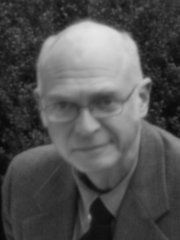
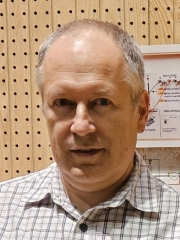
David Finkelstein
Professor Emeritus


Ph.D., MIT, 1953
Phone: (404) 894-5220
Room: Howey-W210A

EMail: david.finkelstein [at] physics.gatech.edu


Personal Data

Birth: July 19, 1929, New York City.
Married, four children. Citizenship: U.S.A.

Degrees and Education

  1. B.S., Physics,1949 City College of New York 1946-1949
  2. Ph.D., Physics, 1953 Massachusetts Institute of Technology 1949-1953

Positions

  • EDITOR, International Journal of Theoretical Physics, 1977-2005
  • PROFESSOR, School of Physics, Georgia Institute of Technology 1980-present
  • Director, School of Physics, Georgia Institute of Technology 1979-1980
  • Dean of Natural Sciences and Mathematics, Yeshiva University 1978-1979
  • Chairman, Physics Department, Yeshiva University 1976-1977
  • Visiting Professor, Hebrew University 1975
  • Visiting Scientist, Intern. Centre for Theoretical Physics, Trieste 1968
  • Professor of Physics, Yeshiva University, New York City 1964-1976
  • Visiting Professor, Acting Head, Physics Department, Tougaloo College, Tougaloo, Mississippi 1964-1965
  • Associate Professor, Yeshiva University, New York City 1959-1964
  • Ford Foundation Fellow, European Centre for Nuclear Research 1959-1960
  • Associate Professor, Stevens Institute of Technology 1958-1960
  • Assistant Professor, Stevens Institute of Technology 1956-1958
  • Instructor, Stevens Institute of Technology 1953-1955
  • Research Associate, Digital Computer Laboratory, MIT 1953
  • Research Assistant, Physics Department, MIT 1949-1953
  • Visiting Scientist, Mathematics Institute, Oxford University 1989
  • Visiting Fellow, Heisenberg Institute of Theoretical Physics, Munich 1993

Research

Current Research

I work on reconciling the fundamental concepts and principles of quantum theory and space-time theory; the long-awaited conciliation of Einstein and Heisenberg. The procedure I am using now I call general quantization.

Physical theories today are based on Lie algebras. Taken modulo isomorphism these form a (moduli) space of rich structure, a rugged landscape. Its peaks and ridges are singular groups without useful finite representations. They are flanked by regular Lie algebras with useful finite-dimensional representations, including simple Lie algebras. Early theorists built their castles on the peaks for ideological reasons. As a result these theories proved to be unstable and riddled with infinities. Heisenberg's quantization moved theories from the peaks to adjacent ridges, leaving them still singular and unstable but less so. General quantization moves theories to the valley, leaving singularity behind; specifically to full matrix algebras. Then the theory is finite.

This move usually adds new variables and then carries out an algebra
homotopy, which can be arbitrarily small and preserve the experimental meaning and successes of the singular theory. It increases the symmetry of the theory and then invokes a spontaneous symmetry-breaking
self-organization to account for the lesser symmetry of the singular theory. It also requires specifying a representation of the new algebras by fixing new quantum numbers, the eigenvalues of central invariants. The theorist need not fix these quantum numbers; they may be left to experiment.

The scalar meson in Minkowski space-time has been general-quantized for
practice [quant-ph\0601002]. General relativity too has functional Lie algebras whose products obeys the laws of Lie algebra when they are defined, but which are infinite dimensional because their elements depend on arbitrary functions. General quantization must replace them by Lie algebras of high dimension.

The resulting space-time is composed of a finite number of elementary dynamical processes, "chronons," typically represented by units of a Clifford algebra. This implies a finite time-quantum: chronons are only finitely local, coupling nearest neighbors. Einstein's infinitesimal locality only appears in the singular continuum limit, not in a regular theory.
A maximal description of the dynamics is a spinor of this Clifford algebra.
Space-time structure and the particle spectrum are to be computed from it.

Questions under study:

Q1. How big is a chronon? The Planck-length estimate for tav is too non-operational to be trusted?

Q2. How do space-time and field theory emerge as a self-organization of a simple quantum dynamics in the limit as the chronon size goes to zero?

Q3. How do we account for the details of the particles of nature as quantum excitations in the dynamic relative to its vacuum value?

Q4. What are the experimental high-energy-physics consequences of the general-quantization already carried out?

Main Past Research

  • Black hole ("unidirectional membrane"). Paper A3
  • Gravitational kinks. Paper A5
  • Ball lightning. Papers A13, A18, B18
  • Homotopy classification of condensate order parameters. Paper A5
  • Quaternionic quantum theory Papers A8, A10, A11
  • Higgs field. Paper A11
  • Giorgi-Glashow electroweak unification. Paper A11
  • Topological spin-statistics theorem. Papers A5, A16
  • Quantum law of large numbers. Paper B17
  • Quantum semigroups. Paper A20
  • Quantum set theory, quantum nets. Book C1

Teaching

PHYS 2001 Evolution of Physics. An introductory survey course. The progressive relativization of physics through classical mechanics, special and general relativity and black holes, quantum mechanics, quantum gauge field theory, and beyond.

PHYS 2502 University Physics II. The modern-physics section of the general physics program. Field, relativity and quantum ideas at an elementary level.

Students considering research with me at the masters or doctoral level may study the following courses with me after the main sequence of quantum physics and electromagnetism.

PHYS 7125 General Relativity.
PHYS 7147 Quantum Field Theory.

PHYS 7150 Quantum Logic (Text: DRF, Quantum Relativity, Springer 1996). Operational quantum epistemology and kinematics. Preparation for fundamental research; remedial retraining for students subjected to "orthodox" quantum theory.

PHYS 8102df/4802df Quantum Relativity Workshop. One evening a week. A workshop on synthesizing relativity with quantum theory, ongoing since 1980. In 2000 we study:

  • Clifford statistics.
  • The spinorial chessboard: a periodic table of cliffordons.
  • Chronon dynamics: non-local quantum space-time-matter-field-law synthesis.
  • Local quantum dynamics as singular limit of chronon dynamics.
  • Dynamics evolution at space-time quasi-singularities.
  • Flow though space-time quasi-singularities.
  • Local pizza, flow through pop-tops.
     

Publications

  1. A1 D. Finkelstein, Internal structure of spinning particles, Physical Review \/ 100, 924-931 (1955)
  2. A2 D. Finkelstein, On relations between commutators, Communications in Pure and Applied Mathematics 8, 245-250 (1955)

  3. A3* D. Finkelstein, Past-future asymmetry of the gravitational field of a point particle, Physical Review 110, 965-977 (1958)
  4. A5* D. Finkelstein and C.W. Misner, Some new conservation laws, Annals of Physics 6, 230-243 (1959)
  5. A8 D. Finkelstein, J.M. Jauch, S. Schiminovich and D. Speiser, Foundations of quaternion quantum mechanics, Journal of Mathematical Physics 3, 207 (1962)
  6. A9 G. Schmidt and D. Finkelstein, Magnetically confined plasma with Maxwellian core, Physical Review 126, 1611-1615 (1962)
  7. A10 D. Finkelstein, J.M. Jauch, S. Schiminovich and D. Speiser, Some physical consequences of general Q-covariance, Helvetica Physica Acta 35, 328-329 (1962)

  8. A11 D. Finkelstein, J.M. Jauch, S. Schiminovich and D. Speiser, Principle of general Q-covariance, Journal of Mathematical Physics 4, 788-796 (1963)
  9. A12 D. Finkelstein, J.M. Jauch, S. Schiminovich and D. Speiser, Quaternionic representations of compact groups, Journal of Mathematical Physics 4, 136-140 (1963)
  10. A13 D. Finkelstein and J. Rubenstein, Ball lightning, Physical Review 135, 390-396 (1964)
  11. A14 D. Finkelstein, High-voltage impulse system, Review of Scientific Instruments 37, 159-162 (1966)
  12. A15 D. Finkelstein, Kinks, Journal of Mathematical Physics 7, 1218-1225 (1966)
  13. A16* D. Finkelstein and J. Rubenstein, Connection between spin, statistics, and kinks, Journal of
    Mathematical Physics 9, 1762-1779 (1968). Reprinted in F. Wilczyk, Fractional Statistics and
    High-temperature Superconductivity, World Scientific Press (1991)
  14. A17 D. Finkelstein, Space-time code, Physical Review 184, 1261 1271 (1969)
  15. A18 D. Finkelstein and J. R. Powell, Earthquake lightning, Nature 228, 759- 760 (1970)
  16. A19 J.L. Anderson and D. Finkelstein, Cosmological constant and fundamental length, American Journal of Physics 38, 901-904 (1971)
  17. A20 D. Finkelstein, Space-time code II, Physical Review D5, 320- (1972)
  18. A21 D. Finkelstein, Space-time code III, Physical Review D5, 2922- (1972)
  19. A22 D. Finkelstein, R.D. Hill and J.R. Powell. The piezoelectric theory of earthquake lightning. J. Geophys. Res. 78, 992-993 (1973).
  20. A23 D. Finkelstein, Space-time code IV, Physical Review D9, 2219- (1974)
  21. A24 D. Finkelstein, G. Frye, and L. Susskind, Space-time code V, Physical Review D9, 2231 (1974)
  22. A25 D. Finkelstein and G. McCollum, Kinks and extensions, Journal of Mathematical Physics 16, 2250-(1975)
  23. A26 D. Finkelstein, The Leibniz project, Journal of Philosophical Logic 6, 425-539 (1977).
  24. A27 D. Finkelstein and D. Weil, Magnetohydrodynamic kinks in astrophysics, International Journal of Theoretical Physics 17, 201-217 (1978)
  25. A28 D. Finkelstein, Holistic methods, International Journal of Theoretical Physics 17, 293-299 (1978)
  26. A29 D. Finkelstein, Cosmological choice, Synthese 50, 399-420 (1982)
  27. A30 D. Finkelstein, Quantum set theory and Clifford algebra, International Journal of Theoretical Physics 21, 489-503 (1982)
  28. A31 D. Finkelstein and S.R. Finkelstein, Computational complementarity, International Journal of
    Theoretical Physics 2, 753-779 (1983)
  29. A32 D. Finkelstein and E. Rodriguez, The quantum pentacle, International Journal of Theoretical Physics 23, 887-894 (1984)
  30. A33 J.G. Williams and D. Finkelstein, Group fields, gravity, and angular momentum, International Journal of Theoretical Physics 23, 61-66 (1984)
  31. A34 D. Finkelstein and E. Rodriguez, Relativity of topology and dynamics, International Journal of
    Theoretical Physics\/ 23, 1065-1098 (1984)
  32. A35 D. Finkelstein and E. Rodriguez, Algebras and manifolds, Physica 18D, 197-208 (1986).
  33. A36 D. Finkelstein, Hyperspin and hyperspace, Physical Review Letters 56, 1532 (1986)
  34. A37 D Finkelstein, S.R. Finkelstein and C. Holm, Hyperspin manifolds, International Journal of
    Theoretical Physics 25, 441-463 (1986)
  35. A38 D. Finkelstein, Coherent quantum logic, International Journal of Theoretical Physics 26, 109-129 (1987)
  36. A39 D. Finkelstein, S.R. Finkelstein, and C. Holm, Hypergravitational field equations, Physical Review Letters 59, 1265-1266 (1987)
  37. A40 D. Finkelstein, Superconducting' causal nets, International Journal of Theoretical Physics 27, 473-519 (1988)
  38. A41* D. Finkelstein, Quantum net dynamics, International Journal of Theoretical Physics 28, 441-467 (1989)
  39. A42 D. Finkelstein, First flash and second vacuum. International Journal of Theoretical Physics 28, 1081-1098 (1989)
  40. A43 D. Finkelstein and W. Hallidy, Q: A language for quantum spacetime topology. International Journal of Theoretical Physics 30, 1991
  41. A44 D. Finkelstein and J. Michael Gibbs, Quantum relativity. International Journal of Theoretical Physics 32, 1801, 1993
  42. A45. Zhong Tang and D. Finkelstein, Relativistically Covariant Symmetry in QED. Physical Review Letters 73, 3055, 1994.
  43. A46. Finkelstein, D. R., H. Saller and Z. Tang, Beneath gauge. Classical and Quantum Gravity 14, A127-A141, 1997.
  44. A47. Finkelstein, D.R., A. A. Galiautdinov, and J. E. Baugh. Unimodular relativity and cosmological constant. Journal of Mathematical Physics 42, 340 (2001).
  45. A48. James Baugh, David Ritz Finkelstein, Andrei Galiautdinov, and Heinrich Saller. Clifford algebra as quantum language. Accepted for publication, Journal of Mathematical Physics (2001).
  46. Non-Journal Publications
  47. B1 D. Finkelstein S. Gill and M. Rotenberg. SADSAC: A single-address simulated automatic computer. Software package, Project Whirlwind, MIT Digital Computing Laboratory 1953.
  48. B2 D. Finkelstein, Velocities of vacuum-spark plasmas, in Conference on Controlled Thermonuclear Reactions, Gatlinburg, TID-7520 (1956)
  49. B3-5 D. Finkelstein, J.M. Jauch, and D. Speiser, Quaternion quantum mechanics I, II, III. European Center for Nuclear Research, Geneva, Report 59-7, 59-11, 59-17 (1959), anthologized in B31.
  50. B6 D. Finkelstein and P. Sturrock, Stability of relativistic self-focusing streams, in J. Drummond (ed.), Symposium on Plasma Physics, McGraw- Hill, pp. 224-242 (1960). 
  51. B7 D. Finkelstein, Neutralized electron beams and Budker accelerators, in Second International Conference on High-Energy Accelerators and Nuclear Instruments, pp. 311-313, Geneva (1960)
  52. B8 D. Finkelstein, Progress in topological relativity, in (ed.), Les Theories Relativistes de la Gravitation, Editions du centre nationale de la recherche scientifique, pp. 409-413 (1958)
  53. B9 D. Finkelstein, Logic of quantum physics, in Transactions of the New York Academy of Science 25, pp. 621-637 (1963)
  54. B10 M. Tavel, D. Finkelstein, and S. Schiminovich, Weak and electromagnetic interactions in quaternion quantum mechanics, Bulletin of the American Physical Society 9, 436 (1965)
  55. B11 D. Finkelstein, Elementary particles and general relativity, in Theories relativistes de la gravitation (Warsaw-Jablonna), Paris (1964)
  56. B12 J.R. Powell, M.S. Zucker, and J.R. Manwaring, D. Finkelstein, Laboratory production of self-sustained atmospheric luminosities, Bulletin of the American Physical Society, 751 (1966)
  57. B13 H. Presby and D. Finkelstein, Laser phasography of jets, shocks, and plasmas, Bulletin of the American Physical Society, 953 (1966)
  58. B17* D. Finkelstein, Matter, space and logic, in R.S. Cohen and M.W. Wartofsky (eds.) Boston Studies in the Philosophy of Science 5, 199-215 (1968)
  59. B18 J.R. Powell and D. Finkelstein, Structure of ball lightning, in H.E. Landsberg (ed.), Advances in Geophysics 13, 141-186, Academic Press (1969)
  60. B22 J. Powell and D. Finkelstein, Ball lightning, American Scientist 58, 262-279 (1970)
  61. B24 D. Finkelstein and J.R. Powell, Lightning production in earthquakes, in International Union of Geodesy and Geophysics 15, Moscow (1971)
  62. B26 D. Finkelstein, Classical and quantum probability and set theory, in E. Harper and C.A. Hooker (eds.), Foundations of Probability Theory, Statistical Inference and Statistical Theories of Science Vol. 3, 11-19, Reidel (1976)
  63. B30 D. Finkelstein, Beneath time, in J.T. Fraser, N. Lawrence and D. Park (eds.), The Study of Time, III, Springer (1978)
  64. B34 D. Finkelstein, Logos/mythos, Kenyon Review 1, 136-150 (1979)
  65. B36 D. Finkelstein, Quantum set theory and geometry, in L. Castell (ed.), Quantum Theory and the Structures of Time and Space, IV, Hanser (1981)
  66. B37 D. Finkelstein, Coherence and possibility, Kenyon Review 4, 95-112 (1982)
  67. B40 D. Finkelstein and E. Rodriguez, Relativity of dynamical law, in P. Weingartner and G. Dorn (eds.) Foundations of Physics, 78-92, H\"older- Pichler-Tempsky (1986)
  68. B41 D. Finkelstein and E. Rodriguez, Quantum time-space and gravity, in R. Penrose and C.J. Isham (eds.), Quantum Concepts in Space and Time, 247- 254, Oxford (1986)
  69. B42 D. Finkelstein, The quantum paradox, in {1987 Yearbook of Science and the Future}\/, 186-207, Encyclopedia Britannica (1987)
  70. B43 D. Finkelstein, Finite physics, in R. Herken (ed.), The Universal Turing Machine --- A Half-Century Survey, Unverzagt and K., Berlin (1989)
  71. B44 D. Finkelstein, The universal quantum, in E. Kitchener (ed.), The World-View of Contemporary Physics, SUNY Press (1989)
  72. B48 D. Finkelstein, Higher-order quantum logics. In Proceedings, Quantum Logics Gdansk 1990, International Journal of Theoretical Physics 1992.
  73. B49* D. Finkelstein and J. Rubenstein, Connection between spin, statistics, and kinks". Reprint of *A16. In F. Wilczyk, Fractional Statistics and High- Temperature Superconductivity, World Scientific Press, 1990.
  74. B50 D. Finkelstein. Misner, kinks and black holes. In Directions in General Relativity, Volume 1, Cambridge University Press, 1993.
  75. B51 Finkelstein, D. R., H. Saller and Z. Tang, Quantum spacetime. In P. Pronin and G. Sardanashvily (eds.), Gravity Particles and Space-Time, 145-171. World Scientific, 1996.
  76. B52 Baugh, J., Finkelstein, D. R., H. Saller and Z. Tang, General covariance is Bose-Einstein statistics. In On Einstein's Path, ed. Alex Harvey, Springer, New York, 1998.
  77. B53 Finkelstein, D. R. Emptiness and relativity. In B. Alan Wallace, ed., Meeting at the Roots, Berkeley CA: Univ, of California Press (2001).

Books

  1. C1. D. Finkelstein, Quantum Relativity. Springer-Verlag, Heidelberg (1996)
Selected Papers
  1. Clifford Algebra as Quantum Language. D. R. Finkelstein and A. Galiautdinov, Journal of Mathematical Physics 42, 1489 (2001). (File is in Adobe Acrobat Format, 279Kb)
  2. Spin, Statistics and Space-Time (File is in Adobe Acrobat Format, 279Kb)
  3. Past-Future Asymmetry of the Gravitational Field of a Point Particle. The Physical Review, Vol. 110, No. 4, 965-967, May 15,1958. (File is in Adobe Acrobat Format, 279Kb)
  4. Some New Conservation Laws. Annals of Physics, Volume 6, No. 3, March 1959. (File is in Adobe Acrobat Format, 329 Kb)
  5. Quantum Relativity. International Journal of Theoretical Physics, Volume 32, No. 10, October 1993. (File is in Adobe Acrobat Format, 1,447 Kb)
  6. COSMPUTATION.  From a ZKM Karlsruhe presentation, October 2003
Notes
  1. Relativity Notes
  2. The State of Quantum Physics
Work in Progress
  1. Quantum Binary Gravity
  2. MELENCOLIA I.1
  3. Finite Quantum Relativity
  4. Finite Quantum Harmonic Oscillator

Links

  1. Relativity Notes
  2. The State of Quantum Physics

CAMPUS MAP  |   CONTACT US  |   LEGAL & PRIVACY INFORMATION  |   SITE MAP
©2007 Georgia Institute of Technology :: Atlanta, Georgia 30332