Latest News
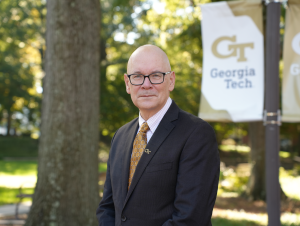
David Collard, senior associate dean for the College of Sciences and professor in the School of Chemistry and Biochemistry, has accepted an appointment to serve as the interim leader for the College of Sciences.
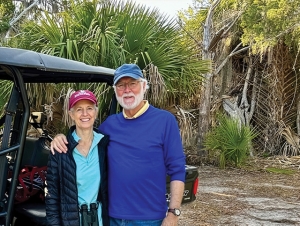
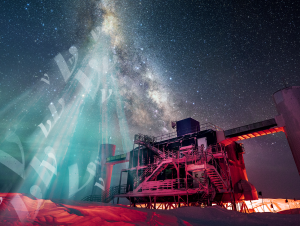
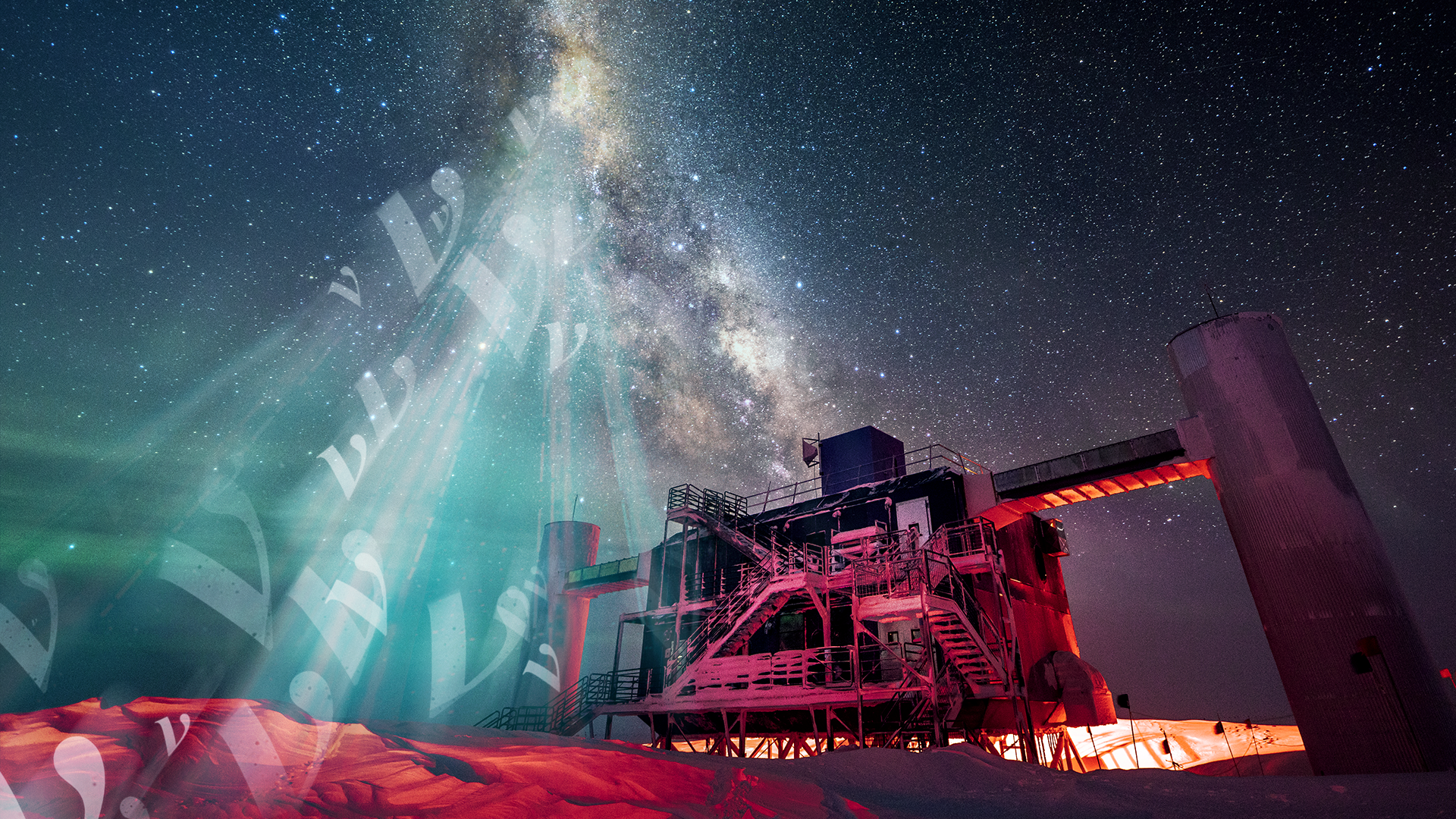
For Georgia Tech physicists, this year’s Nobel Prize in Physics recognizes decades of work that helped establish neutrino astronomy as a new way to understand the universe.
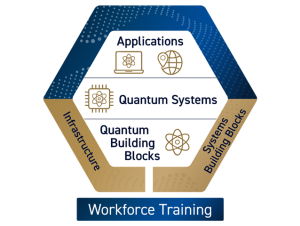
The Georgia Tech Quantum Applications Research Center will connect expertise from across Georgia Tech and GTRI to advance quantum research, collaboration, and support emerging technologies.
Events
CRA SEMINAR | Federico Testagrossa | DESY Zeuthen | Host: David A. Raudales O.
CRA SEMINAR | Federico Testagrossa | DESY Nat'l Institution | Host: David A. Raudales O.
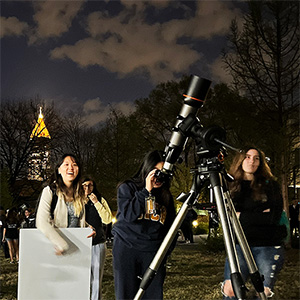
Observatory Public Night
On select Thursday evenings during the academic year, the Georgia Tech School of Physics invites you to observe various bright celestial objects through telescopes.
The Ever-Changing Georgia Coast with President Emeritus G. Wayne Clough
Join us for a special author conversation, reading, and Q&A followed by a book-signing reception with refreshments, Georgia Tech for Georgia’s Tomorrow swag, and drawing for signed books.
2026 College of Sciences Homecoming Tailgate
Reconnect with fellow College of Sciences alumni, friends, faculty, and students while enjoying food, drinks, and Georgia Tech spirit.
School of Physics Fall Colloquium Series- Dr. Andreas Karch(UT Austin)
Dr. Andreas Karch(UT Austin) Making the Great Desert Bloom
SPECIAL CRA SEMINAR | Alexander Plavin | [Nat'l Radio Astronomy Observatory NRAO] | Host: Prof. Ignacio Taboada
SPECIAL CRA SEMINAR | Aleksandr Plavin (Sasha) [Nat'l Radio Astronomy Observatory NRAO] | Host: Prof. Ignacio Taboada
School of Physics Fall Colloquium Series- Dr. Nitin Samarth(Penn State)
Dr. Nitin Samarth(Penn State) Puzzles at the interface between topology, magnetism, and superconductivity
Experts in the News
In an article published by The Conversation, Shiladitya Banerjee, associate professor in the School of Physics, discusses new research suggesting that single bacterial cells exhibit learning-like behavior in changing environments.
This article was also published by The Scientist.
The Conversation 2026-09-10T00:00:00-04:00If you dropped the exact same pulse of food onto two identical bacteria, you'd expect the exact same response. That's not what happened. In a study published in PRX Life in May 2026, researchers at Carnegie Mellon University and Georgia Tech found that E. coli exposed to unstable, feast-and-famine conditions adapted to new food far faster than bacteria pulled from a stable environment, even when the immediate conditions in front of them were identical.
You may think that one cell has no place to keep things such as memories. Scientists, including Josiah Kratz, a postdoctoral fellow in Georgia Tech’s School of Physics, observed tens of thousands of individual E. coli bacteria through a special microfluidic apparatus and found that the cause was ribosomes, the components of the cell responsible for building proteins and determining the growth rate.
The News International 2026-09-09T00:00:00-04:00Researchers in the School of Physics, working with King Fahd University of Petroleum and Minerals, have found that standard methods for identifying chirality in topological phases fail when applied to mixed quantum states. The study reveals that established diagnostics, including bulk-boundary correspondence and the modular commutator, are unreliable in these complex systems. Consequently, the research presents two new measures, based on relative entropy, to accurately diagnose chirality and determine the chiral central charge in decohered topological phases, indicating a need for a new set of tools when investigating mixed-state topology.
Quantum Zeitgeist 2026-07-16T00:00:00-04:00Bacteria have no neurons or memories in the human sense. Yet in a new study, researchers at Georgia Tech and Carnegie Mellon University — including School of Physics Associate Professor Shiladitya Banerjee and Postdoctoral Fellow Josiah Kratz — found that individual E. coli cells carried traces of past hardship into the future. When nutrients repeatedly rose and fell, the cells changed how quickly they grew, suggesting that even simple microbes can use experience to prepare for what may come next.
ZME Science 2026-06-10T00:00:00-04:00Georgia Tech researchers have recreated the effects of solar wind on lunar minerals in a laboratory experiment, providing new evidence that the constant stream of charged particles from the sun plays a major role in shaping the moon’s surface.
The team exposed ilmenite, a mineral commonly found on both Earth and the moon, to a synthetic version of solar wind. The experiment produced nanophase iron, tiny metallic particles that are widely observed in lunar soil and are considered a key signature of space weathering.
Interesting Engineering 2026-06-10T00:00:00-04:00A new study led by researchers, including School of Physics graduate student Julia Esposito and Associate Professor Gongjie Li, used 1,500 virtual planetary systems to examine how planet-planet scattering may have influenced the formation of Jupiter-sized planets.
American Astronomical Society NOVA 2026-05-22T00:00:00-04:00